For many townfolk jungles are mere tales from novels or snippets of the African savannah on NatGeo narrated by the calm regal voice of David Attenborough. Few have ever experienced the real jungle. It’s majestic mountains, luscious plains of green grass, juicy wild fruit and the soothing sounds of tropical birds chirpping to the warm rays of the morning sun. Lying in its labrinth just a stone throw away from its beauty are man eating lions, venomous snakes, deadly crocs, poisonous plants, and vicious diseases. The African jungle is no match for mere mortals yet the sight of it is nothing but ethereal. It’s a world of its own and townfolk looking to explore its vastness must obey its rules or face death. You see, the African market is a jungle and investors the townfolk who come to enjoy its fruit.
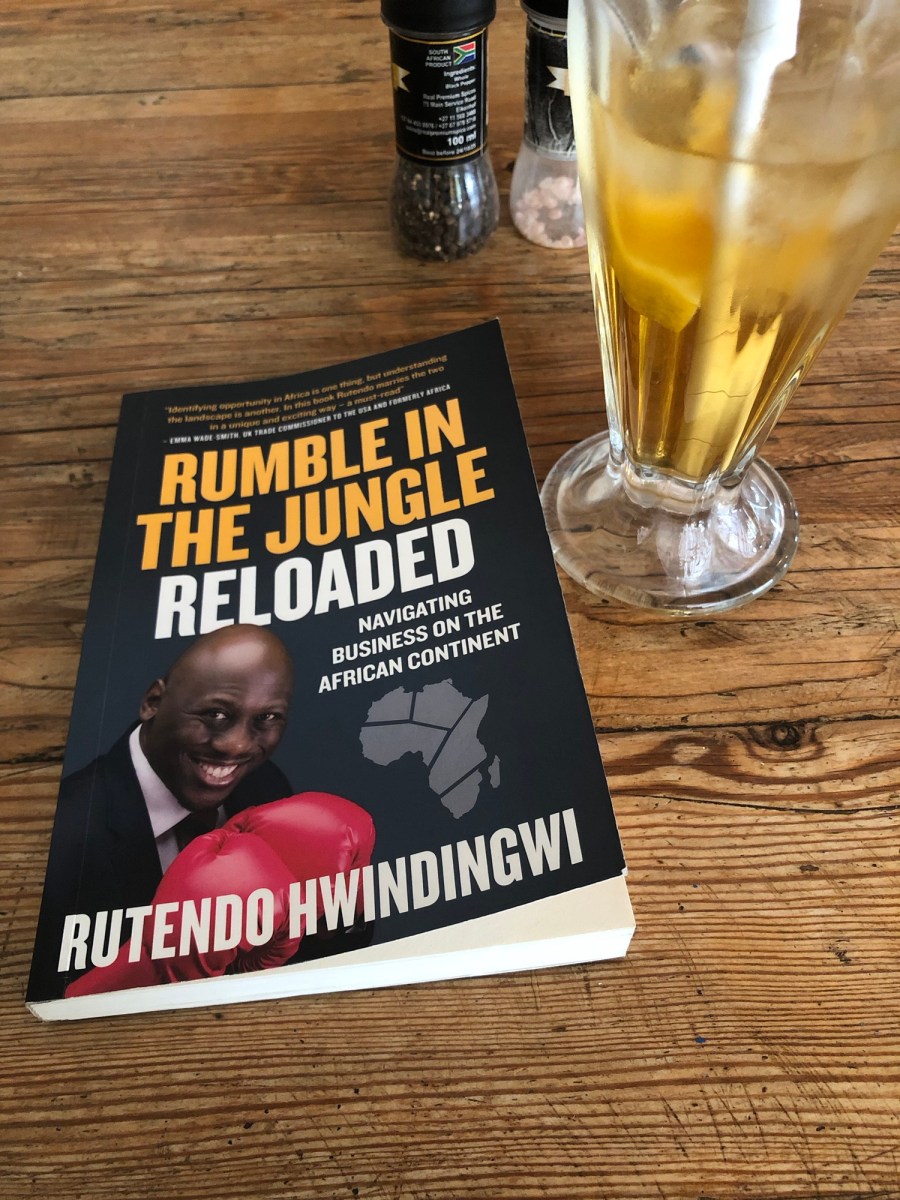
Rutendo Hwindingwi‘s “Ramble in the Jungle Reloded” is a gift for any investor looking to operate in any one of Africa’s 54 economies. The book succinctly identifies issues most investors face when entering the African market. Rutendo’s book is a go to guide, if you will. A clear set of instructions on how to survive the jungle fever and come out stronger than Mohammed Ali when he defeated George Foreman in the heart of Africa, Kinshasa D.R.C, 1974. Besides the book being a high level business guide it is also testament to Rutendo’s literary prowess. Using the 1974 bout between probably two of history’s best boxers Mohammed Ali and George Foreman, Rutendo explains operating in Africa. Investors can either be an non-conventional Ali and succeed or a conventional George Foreman and fail in the jungle market. Perfect is it not, that this bout was held right in the heart Africa? Home to Africa’s biggest rainforest and the second biggest in the world. Ironic is it not, that it was organized by the late dictator of Zaire (now D.R.C) Mobotou Seseko, who frankly speaking turned Africa’s most fertile land into a barren plain?
Drawing on his own experiences and the success stories of others on the beautiful continent Rutendo explores 5 key lessons when doing business in Africa. If you want to float like a butterfly and sting like a bee in the African market you need to understand these five basics.
- Understand the Territory
Africa is not a country, it’s a continent of 54 multi-ethnic, multicultural, multilingual and multi-racial countries. What is good for the goose is often not good for the gander. Investors must know what makes the market tick in the specific area they want to operate in. Rutendo juxstaposes Mpesa’s astronomical success in a relatively small economy like Kenya versus its catastrophic failure in South Africa, an economy 4 times that of Kenya. Having worked as a lawyer in Namibia and Zimbabwe, I can’t emphasize this enough. Even though both countries are common law jurisdictions with similar laws (in many cases the same), the lawyers, judges and regulators approach the laws differently. The same legal principle will likely result in similar but different outcomes in both countries. - Innovate
The business environment in Africa does not respect well established principles applied in the developed Western economies and the ever-rising Asian world. Investors must always innovate to stay alive in this majestic jungle. Rutendo draws on his own experience in Nigeria. Leading Sage Plc’s expansion in Nigeria, he narrates how piracy in Lagos’s famous (or infamous) Computer Village forced the company to change its strategy. Most project finance lawyers internationally, know that certain principles are non-negotiables in infrastructure projects. But what do you do when investing in a country like Zimbabwe with its currency issues spanning close to 3 decades. Currency woes just as old as I am. The answer is simple, you tweak the project finance rule book. Nothing is cast in stone and humans are not designed to be stagnant anyway. Investors shouldn’t be walking away from hundreds of millions simply because certain western standards won’t be applied the same way in Africa. - Know your threats
The political, economic, social, technological, legal and environmental (PESTLE) regime in Africa can be an elusive beast if one operates without the right tracker. Rutendo picks MTN’s run-ins with Nigerian regulators as a perfect example of knowing and preparing for threats that may rise in Africa. Drawing from my own experiences, this is probably the biggest assessment to make before entering the African marketplace. Infrastructure investors know this all too well. If you cannot predict what may happen, it does not necessarily mean that an investor should pull out. This is where lesson 1 and 2 kick in. Being prepared for the unknown needs one to understand where they are operating and be innovative to solve issues and threats. - Grab Opportunities
Fortune favors the brave, the jungle is not for those who jitter and dither, for carnivorous beasts lay hidden in the undergrowth ready to devour the risk averse victim. If you have been in Johannesburg, you will know that some of its once pristine centres have since run down and have been taken over by criminal gangs and slumlords. Rutendo narrates the story of Okai-Farayi Chinyanga’s transformation of a rundown building in Johannesburg which has changed the landscape in that area. Personally I draw inspiration from Solgas, a Zimbabwean energy company born out its co-founder Tafadzwa Mundicha, experiencing electricity outages at his metal works factory. Without experience in the energy sector Tafadzwa identified a gap in the market and seized the opportunity. - Apply relentless drive and determination. Quitters never win! Africa is not made for quitters, it requires patience, vision and determination. Rutendo tells us the story of a man aptly named, Strive Masiyiwa. Now a tech billionaire made in Africa, Strive fought a long and hard battle against the Zimbabwean government in the 90s. The government was determined to not issue his company Econet a telecoms license but he strived through many court cases to get the license. Now, Econet is Zimbabwe’s biggest tech company. Liquid Telecom, Africa’s biggest tech infrastructure company is born out of Strive’s success with Econet.
Rutendo’s book is available here.
 Takunda Tinashe Gumbu